
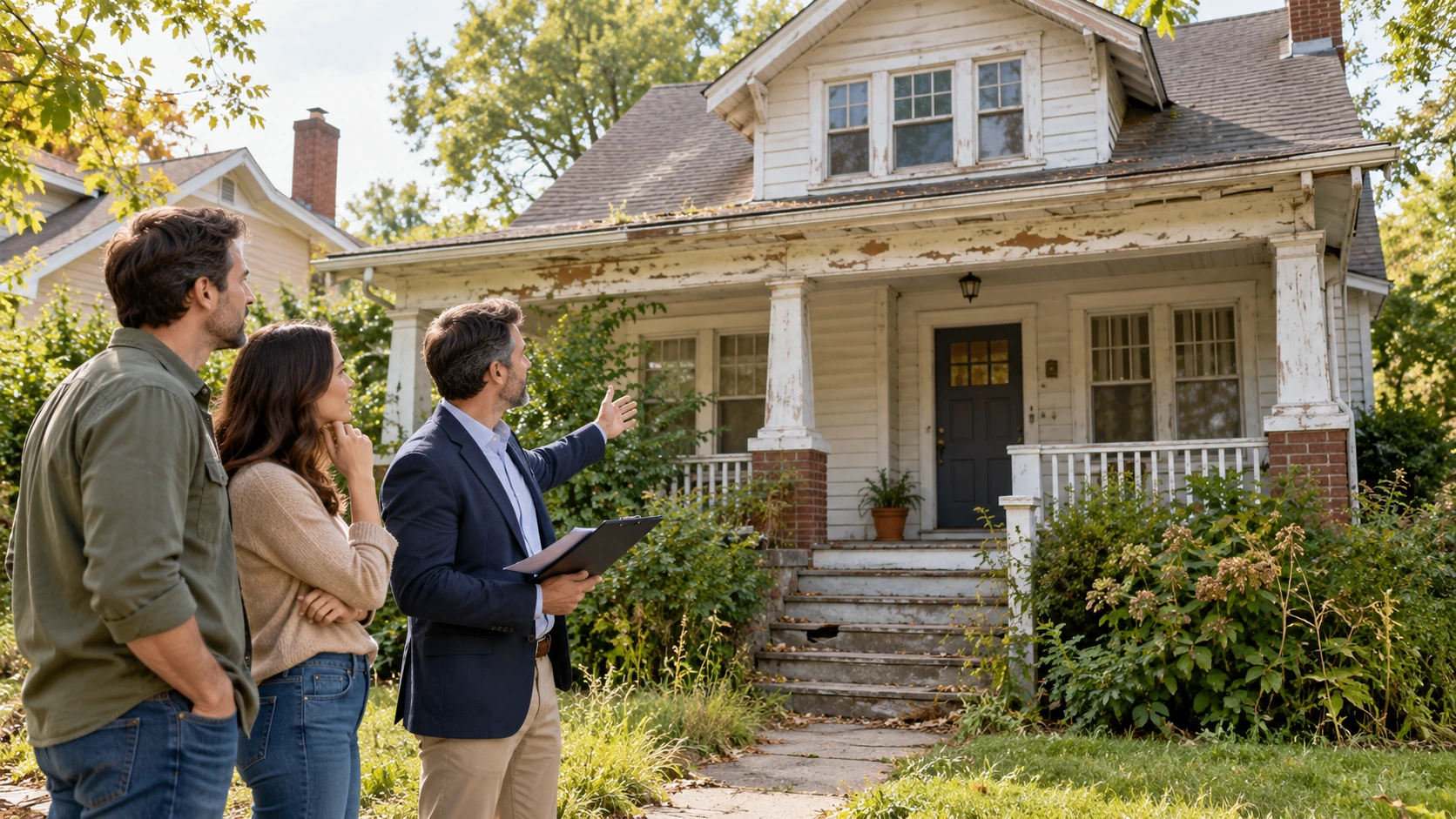
Buying a fixer-upper can be a smart move in Bucks County, but only when the purchase price, the renovation costs and the finished value all line up. The listing photos rarely tell you which way it will go. A dated split-level in Levittown or an old stone farmhouse near Doylestown can look like a bargain on paper and still cost more than a move-in-ready home once the walls are open.
If you have been outbid on updated homes and started looking at houses that “need some TLC,” you are not alone. Many buyers judge a fixer-upper with a quick walk-through and a rough guess on repairs. That is how good deals turn into money pits.
This guide explains why fixer-uppers often cost more than expected, how to tell if one is worth it and how to buy one the smart way. The DiCicco Team brings over 20 years of investment, renovation and construction experience to every showing.
What You’ll Learn
- What buying a fixer-upper in Bucks County really means
- Why fixer-uppers cost more than buyers expect
- How to tell if a fixer-upper is worth it
- Fixer-upper renovation costs in 2026
- How to buy a fixer-upper the smart way
- Tips for flippers and landlords
- Frequently asked questions
What Buying a Fixer-Upper in Bucks County Really Means
A fixer-upper is any home that needs more than paint and carpet to reach its full value, from new kitchens and baths to roofs, heating systems or structural repairs.
The appeal is easy to see. The median sale price in Bucks County has been running in the low-to-mid $500,000s this year, and updated homes in Newtown, Yardley and Richboro often sell well above that. A home that needs work can be the most realistic way into a preferred school district or neighborhood on your budget.
The risk is just as real. Inventory is up from last year, but well-priced homes still sell close to asking. That pressure pushes buyers to decide fast on homes they do not fully understand, often with a repair budget built on online averages and no plan to finance the work.
Why Fixer-Uppers Cost More Than Buyers Expect
In our two decades of buying, renovating and selling homes across Bucks County, the same causes show up again and again.
The Age of Bucks County Homes
Bucks County has a large share of older homes. Stone farmhouses in Upper and Central Bucks, post-war homes in Levittown and Bensalem and 1960s colonials in Southampton and Warminster each come with their own issues. Homes built before 1978 may contain lead paint. Older homes may still have knob-and-tube wiring, undersized electrical panels or galvanized pipes. Each adds cost that a cosmetic budget will not cover.
Problems You Cannot See at a Showing
The costliest problems are usually hidden. Many stucco homes built in the 1990s and 2000s across Southeastern Pennsylvania have trapped moisture and rot behind the walls, and full remediation can exceed $100,000. Older homes heated with oil may have a buried tank. Many Upper Bucks homes rely on private wells and septic systems. Sewer lines from the house to the street can crack or fill with roots. A standard home inspection does not fully test any of these.
Township Rules Before and After Settlement
Many Bucks County municipalities require a resale use and occupancy (U&O) inspection before a new owner moves in, and the rules vary by township. Some check smoke detectors, handrails and outlets. Some require a sewer lateral inspection or current septic records. Some flag past work done without permits. Failed items can become the buyer’s responsibility after settlement, often with a deadline to fix them.
Labor, Permits and Timelines
Skilled trades in the Philadelphia region stay busy and price their work accordingly. Permits add time, and older homes often reveal new problems once demolition starts. A six-week project can stretch to three or four months, which can mean paying rent and a mortgage at once, or months of extra holding costs for investors.
Is Buying a Fixer-Upper Worth It? How to Tell
A fixer-upper is usually worth a closer look when most of the work is cosmetic or easy to price, and when the purchase price plus renovations still lands below what similar updated homes sell for nearby.
Good signs:
- A solid foundation, a dry basement and a roof with life left
- Dated kitchens, baths, floors and finishes you can update over time
- A layout that works without moving walls or plumbing
- Updated homes nearby selling well above your all-in cost
Red flags:
- Foundation cracks, sagging floors or active water in the basement
- Stucco with soft spots, staining or high moisture readings
- A fill pipe or vent in the yard that points to an old oil tank
- Additions or finished basements with no permit history
- An asking price only slightly below updated homes nearby
Pros and Cons of Buying a Fixer-Upper
The pros are a lower entry price, less competition, the chance to build equity and the freedom to finish the home your way. The cons are surprise repairs, extra financing steps, months of disruption and the risk of spending more than the home will be worth.
Fixer-Upper Renovation Costs: Realistic 2026 Ranges
Treat these as planning ranges, not quotes. Costs around Bucks County and Philadelphia tend to run at or above national averages.
| Project | Typical Planning Range |
|---|---|
| Cosmetic kitchen refresh | $25,000 to $40,000 |
| Full kitchen remodel with new cabinets and layout | $80,000 or more |
| Midrange bathroom remodel | $25,000 to $35,000 |
| Asphalt shingle roof replacement | $12,000 to $25,000 |
| Heating and cooling system replacement | $10,000 to $20,000 |
| Electrical panel upgrade | $2,500 to $6,000 |
| Sewer lateral repair or replacement | $5,000 to $15,000 |
| Stucco remediation | Can exceed $100,000 |
Cosmetic updates tend to return more of their cost at resale than full gut remodels. A minor kitchen refresh can recover most or all of its cost, while a full remodel often returns closer to half. Add a contingency of 10% to 20% for surprises, and plan toward the higher end in older homes.
How to Buy a Fixer-Upper the Smart Way
- Get pre-approved for the right loan. Renovation loans roll repair costs into your mortgage. The FHA Limited 203(k) covers non-structural repairs up to $75,000, the Standard 203(k) handles structural work within FHA county limits and conventional renovation loans offer more flexibility. Confirm current terms with a lender who knows renovation loans.
- Run the numbers before you fall in love. Start with what the home will be worth when finished. Subtract the price, renovation estimate, contingency, closing costs and carrying costs. If the gap is thin, walk away.
- Bring construction eyes to the showing. Someone who understands building systems can catch problems before you write an offer.
- Order specialty inspections. Consider a sewer scope, oil tank sweep, stucco moisture test, well and septic testing and a structural engineer if anything looks off.
- Protect yourself in the contract. Keep your inspection contingency, ask about U&O requirements before settlement and collect written contractor bids during your inspection period.
Fixer-Upper Home Investment Tips for Flippers and Landlords
Investors judge a fixer-upper home investment on numbers, not feelings. Many flippers start with the 70% rule: the maximum offer equals 70% of the after-repair value minus repair costs. A home worth $500,000 after renovation with $75,000 in repairs works out to a $275,000 maximum offer. In a competitive Bucks County market, many deals will not fit this rule, so accurate repair estimates matter even more.
Flippers should also count Pennsylvania’s realty transfer tax, which typically totals about 2% in Bucks County and is usually split between buyer and seller. You will likely pay your share twice: once when you buy and again when you sell.
Landlords should check local rental rules. Some townships require a U&O inspection before each new tenant, and homes built before 1978 carry federal lead paint disclosure rules for renters. Conventional renovation loans can work for investment properties, while FHA 203(k) loans require you to live in the home.
Why Bucks County Buyers Choose The DiCicco Team for Fixer-Uppers
Any agent can show you a fixer-upper. Knowing what it will really cost to fix is a different skill. Anthony DiCicco’s 20+ years in investment properties, renovations and custom construction help our clients spot issues early, build realistic budgets and pass on homes that will never pay off.
- 590 career transactions and 101 sales in the last 12 months
- More than 500 families helped and over $200 million in sales
- Recognized among the top 1% of Pennsylvania Realtors
- Trusted connections with lenders, inspectors and contractors across Bucks County and Montgomery County
The DiCicco Team will tell you honestly when a house is a good opportunity and when it is not.
Frequently Asked Questions
Is buying a fixer-upper worth it in Bucks County?
It can be, especially when most of the work is cosmetic. A fixer-upper makes sense when the purchase price plus renovation costs, a contingency and carrying costs still land below what similar updated homes sell for nearby. Homes with major structural, stucco or system problems often cost more to fix than they add in value.
How much should I budget for fixer-upper renovation costs?
Budgets vary widely. A cosmetic kitchen refresh in the Bucks County area often runs $25,000 to $40,000, while a full kitchen remodel can reach $80,000 or more. Roofs, heating systems and sewer lines add more. Get written contractor bids before you commit, and set aside 10% to 20% extra for surprises.
Can I get a mortgage on a fixer-upper in Pennsylvania?
Yes. Renovation loans let you finance the purchase and repairs together. The FHA Limited 203(k) covers non-structural work up to $75,000, the Standard 203(k) handles larger and structural projects, and conventional renovation loans offer more flexibility, including for some investment properties. A lender experienced with renovation loans can confirm current limits and requirements.
What problems should I look for in an older Bucks County home?
Watch for foundation cracks, water in the basement, an aging roof, outdated wiring like knob-and-tube, galvanized plumbing and lead paint in homes built before 1978. Also check for buried oil tanks, failing sewer lines, well and septic issues and moisture behind stucco. Specialty inspections can uncover what a standard inspection may miss.
Do I need a use and occupancy certificate when buying a fixer-upper?
Many Bucks County municipalities require a resale use and occupancy inspection before a new owner moves in, but the rules vary by township. Some require sewer lateral inspections or septic records. If the home fails, you may receive a temporary certificate and a deadline to make repairs. Ask about these requirements before you sign.
What is the 70% rule for flipping a house?
The 70% rule is a common investor guideline. Your maximum offer should equal 70% of the home’s after-repair value minus repair costs. For a home worth $500,000 once renovated with $75,000 in repairs, the maximum offer would be $275,000. It is a starting point for screening deals, not a guarantee of profit.
Should I waive the inspection to win a fixer-upper?
We do not recommend it. Fixer-uppers carry the highest risk of hidden problems, so the inspection contingency is your best protection. If you want a stronger offer, consider a shorter inspection period or agreeing not to ask for small repairs. Keep your right to walk away if major issues show up.
How long does it take to renovate a fixer-upper?
Cosmetic updates like paint, floors and fixtures may take a few weeks. A kitchen or bathroom remodel often takes two to four months once permits and materials are in place. Whole-house renovations can take six months or longer. Older homes often reveal new issues during demolition, so build extra time into your plan.
Next Steps: Talk to Us Before You Make an Offer
- Price plus renovation costs must stay below the finished value
- Hidden issues cause the biggest budget overruns
- Renovation loans and specialty inspections protect your investment
- Investors should run the 70% rule and count transfer tax and holding costs
Thinking about buying a fixer-upper in Bucks County? Contact The DiCicco Team for a free, no-obligation buyer consultation. We will review your budget, connect you with renovation-friendly lenders and help you judge any home before you commit. Call (215) 385-2006 or schedule your consultation online. We serve all of Bucks County, Montgomery County and Philadelphia.
About Anthony DiCicco
Anthony DiCicco leads The DiCicco Team at Keller Williams Newtown, bringing two decades of real estate experience to every transaction. His career began over 20 years ago with investment properties, renovations and custom home construction, giving him insight into property condition and repair costs that most agents do not have.
As a Zillow Premier Agent with 5-star ratings on Google (110+ reviews) and Zillow (95 reviews), Anthony and his team have helped over 500 Bucks County families buy and sell homes, completing 590 transactions totaling more than $200 million.
Licensed in Pennsylvania (RS315362) and recognized among the top 1% of Realtors statewide, Anthony serves Bucks County, Montgomery County and Philadelphia. Contact Anthony at (215) 385-2006 or anthony@diciccosells.com.