
You walked through a Doylestown home that checked every box, hired a licensed inspector, and got back a clean report. Three months after closing, the basement floods during the first heavy rain—and the repair estimate makes your stomach drop. How did the inspection miss this?
Here is the truth most buyers learn too late: a home inspection has real limits, and the most expensive home inspection red flags often hide in plain sight. Inspectors document what they can see on one visit. They don’t open walls, they avoid liability by hedging their language, and they rarely tell you what a repair will actually cost. You’ve probably been told “just trust the inspector”—but that advice leaves you exposed.
This guide explains the home inspection warning signs an inspector’s report tends to soften, why those gaps exist, and how to protect yourself before you sign. With two decades of construction and renovation experience behind 590 closed transactions, The DiCicco Team sees what other agents—and sometimes inspectors—walk right past.
What You’ll Learn
- What a home inspection actually covers (and what it doesn’t)
- Why inspectors hedge their language and miss costly issues
- How to spot red flags yourself during the walkthrough
- The repair problems that cost buyers the most after closing
- Why Bucks County families bring The DiCicco Team to every inspection
- Frequently asked questions about home inspection problems
- Your next steps
What “Missed” Home Inspection Problems Really Are
A home inspection is a visual, non-invasive snapshot of a property on a single day. The inspector checks accessible systems—roof, electrical, plumbing, HVAC, structure—and reports what is visible. They do not cut into drywall, move heavy furniture, or dig up the yard. That means real problems can sit just out of view.
Home inspection red flags are the early signals of those hidden issues: a faint water stain, a fresh coat of paint in one corner of a basement, a furnace that’s 22 years old, or a grading slope that pushes rainwater toward the foundation. First-time buyers miss them because they don’t know what to look for. The consequences are expensive—foundation, roof, and water-intrusion repairs routinely run into five figures.
With Bucks County’s mix of century-old farmhouses, mid-century homes, and new construction, the range of potential problems is wide. A clean report is reassuring, but it is not a guarantee. Knowing the warning signs yourself turns you from a passenger into an informed buyer.
Why Inspectors Miss or Downplay Red Flags
Understanding why these gaps exist helps you fill them. In our experience walking hundreds of Bucks County buyers through inspections, four causes come up again and again.
1. Inspections Are Visual and Non-Invasive by Design
Inspectors are contractually limited to what they can see and safely access. They can’t open a wall to confirm mold, lift wall-to-wall carpet, or test inside a sealed chimney. A seller who repaints a stained ceiling the week before listing can hide the very evidence an inspector relies on. The inspection isn’t failing—it’s working exactly as scoped, which is narrower than most buyers assume.
2. Liability Drives Hedged Language
Read enough reports and you’ll notice phrases like “recommend further evaluation by a licensed specialist.” That language protects the inspector from liability—but it quietly transfers the decision back to you. A buyer who doesn’t understand that a “monitor for movement” note on a foundation crack can mean thousands in future work will treat a serious flag as routine boilerplate.
3. Inspectors Rarely Quote Repair Costs
Most inspectors identify a defect but won’t tell you what it costs to fix—that’s outside their role and adds liability. So a buyer reads “aging roof, near end of service life” and has no idea whether that’s a $600 repair or a $14,000 replacement. Without a cost lens, you can’t negotiate credits or decide whether to walk. This is where a contractor’s eye changes everything.
4. Cosmetic Updates Mask Structural Issues
Flipped homes are common in the current market, and fresh finishes can disguise underlying problems. New laminate over a soft subfloor, a staged basement hiding efflorescence, or a freshly mulched bed sloping toward the house—these are the home inspection warning signs that look like upgrades to an untrained eye. Knowing construction means seeing past the staging.
Red Flags to Catch Yourself During the Walkthrough
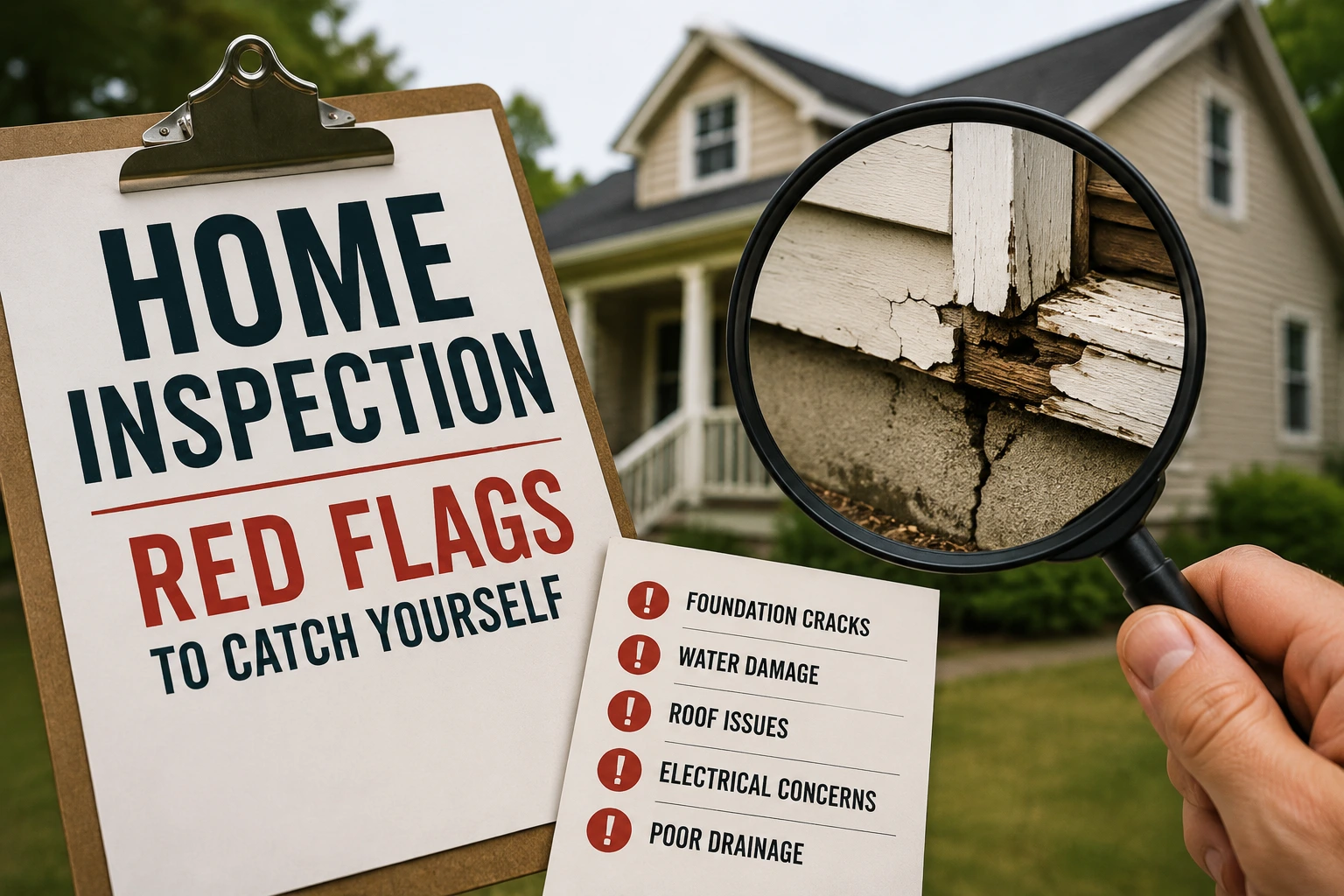
You don’t need a contractor’s license to catch the early warning signs. Use this checklist on every showing, before you ever write an offer.
- Water and moisture: Stains on ceilings or basement walls, a musty smell, white chalky residue (efflorescence) on foundation walls, or a sump pump that looks brand new in an older home.
- Grading and drainage: Ground that slopes toward the house, downspouts dumping water next to the foundation, or mulch and soil piled above the foundation line.
- Foundation and structure: Cracks wider than a quarter inch, doors that won’t close squarely, or sloping floors you can feel underfoot.
- Fresh paint in odd places: A single repainted ceiling corner or one wall in a basement often hides a past leak.
- Aging systems: Ask the age of the roof, furnace, water heater, and electrical panel. Anything near or past its service life is a budget item, not a footnote.
- DIY and permit gaps: Visible amateur wiring, additions that don’t match the original structure, or work that may never have been permitted.
How to Protect Yourself Before You Buy
Catching home inspection red flags is only step one. Here’s how to act on them and avoid buying a money pit in Bucks County.
What You Can Do Yourself
- Attend the inspection in person. Walk the property with the inspector and ask direct questions instead of waiting for the written report.
- Ask for the age and service life of every major system, and write those numbers down.
- Order specialty inspections when a flag appears—radon, sewer scope, mold, or a structural engineer for foundation concerns. These cost a few hundred dollars and can save tens of thousands.
- Translate every “further evaluation” note into a real cost estimate before your inspection contingency expires.
When to Bring in Professional Help
Anthony DiCicco spent more than 20 years in investment properties, renovations, and custom home construction before and during his real estate career. That background means he reads a property the way a builder does—spotting a failing grade line, an undersized electrical panel, or a roof patched to last through a sale. When our clients tour a home, we flag the issues that turn into negotiation leverage or deal-breakers, and we connect costs to defects so you know what you’re really buying.
That construction insight directly informs negotiation. Our 98% list-to-sale ratio reflects pricing and negotiation expertise that works just as hard for buyers: when an inspection surfaces a $12,000 roof, we help you secure a credit or a price reduction rather than absorbing it after closing. Across 590 transactions, we’ve seen which repairs are normal wear and which are warnings to walk away.
Why this matters financially: An inspector who flags an “aging roof” costs you nothing to fix on paper. A buyer’s agent who knows that roof needs full replacement—and negotiates a credit before closing—can save you more than the entire cost of representation. Going it alone in a competitive market is where buyers get hurt.
Why Bucks County Families Choose The DiCicco Team
For two decades, The DiCicco Team has helped over 500 Bucks County families buy and sell with confidence. Anthony’s construction and investment background gives clients an advantage most agents simply can’t offer—the ability to spot property problems an inspector’s report might soften.
- Construction-trained eye: 20+ years in renovations and custom builds means we see structural and system issues during the first showing, not after closing.
- Proven negotiation: A 98% list-to-sale ratio and 590 closed transactions translate inspection findings into real credits and price reductions.
- Honest guidance: Clients consistently note that Anthony “doesn’t sugarcoat a thing” and will tell you to walk from a bad house—even when it costs us the sale.
- Trusted network: We connect buyers with reliable inspectors, specialists, and handymen, so every red flag gets a real answer.
With 5-star ratings on Google (110+ reviews) and Zillow (95 reviews) and recognition in the top 1% of Pennsylvania Realtors, we’ve built our reputation on protecting buyers from costly mistakes.
Frequently Asked Questions
What are the biggest red flags during a home inspection?
The costliest home inspection red flags involve water and structure: foundation cracks wider than a quarter inch, water stains or musty odors, poor grading that directs water toward the house, and aging roofs or HVAC systems near the end of their service life. These signal repairs that can run well into five figures.
Can a home inspection miss serious problems?
Yes. Inspections are visual and non-invasive, so inspectors can’t see inside walls, under carpet, or below the soil. Sellers can also mask issues with fresh paint or cosmetic updates. A clean report reduces risk but never guarantees a problem-free home, which is why an experienced buyer’s agent matters.
How much does a home inspection cost in Bucks County?
A standard home inspection in Bucks County typically runs about $400 to $600, depending on home size and age. Specialty inspections—radon, sewer scope, or structural—add a few hundred dollars each but are well worth it when a red flag appears during the general inspection.
Should I waive the home inspection to win a bidding war?
We rarely recommend waiving the inspection outright. In a competitive Bucks County market, there are smarter ways to strengthen an offer—shorter inspection windows or information-only inspections—that keep you protected. Waiving entirely exposes you to repair costs that can dwarf any advantage you gained on price.
What does “recommend further evaluation” mean on an inspection report?
It means the inspector saw something concerning but can’t fully assess it within their scope, so they’re directing you to a specialist. Treat this language as a flag, not boilerplate. Get the specialist’s opinion and a cost estimate before your inspection contingency expires so you can negotiate or walk.
How long does the home buying process take in Bucks County?
From accepted offer to closing typically takes 30 to 45 days, with inspection usually scheduled in the first week or two. Well-priced homes still move quickly here, averaging about 32 days on market, so having an agent ready for same-day showings and fast inspection coordination is a real advantage.
Can a buyer’s agent really spot problems an inspector misses?
An agent with a construction background can. Anthony DiCicco’s 20+ years in renovation and custom building means he often identifies grading, structural, or system issues during the first walkthrough—and connects them to repair costs. That insight shapes negotiation and helps buyers avoid expensive surprises after closing.
Next Steps
Here’s what we covered:
- A home inspection is visual and non-invasive—serious problems can hide in plain sight
- Inspectors hedge language and rarely quote repair costs, leaving the decision to you
- You can catch many red flags yourself by watching for water, grading, structure, and aging systems
- A construction-trained buyer’s agent turns inspection findings into negotiation leverage
Contact The DiCicco Team for a free buyer consultation. We’ll walk you through what to watch for, attend your inspection, connect you with trusted specialists, and negotiate hard on any issues that surface.
Call (215) 385-2006 or visit diciccosells.com/contact to get started. We serve all of Bucks County, Montgomery County, and Greater Philadelphia. With 590 successful transactions and 5-star ratings on Google and Zillow, we’re ready to help you buy with confidence.
About Anthony DiCicco
Anthony DiCicco leads The DiCicco Team at Keller Williams Newtown, bringing two decades of real estate experience to every transaction. His career began over 20 years ago with investment properties, renovations, and custom home construction, giving him insight into property condition and repair costs that most agents simply don’t have.
As a Zillow Premier Agent with 5-star ratings on Google (110+ reviews) and Zillow (95 reviews), Anthony and his team have helped over 500 Bucks County families, completing 590 transactions totaling more than $200 million. His 98% list-to-sale price ratio reflects expertise in accurate pricing and skilled negotiation. Licensed in Pennsylvania (RS315362) and recognized in the top 1% of state Realtors, Anthony serves Bucks County, Montgomery County, and Philadelphia.
Contact Anthony at (215) 385-2006 or anthony@diciccosells.com.